By Ahvia Designs | Gauteng, South Africa | Residential Interior Design | June 2026
The living room is where people spend most of their time, yet it is often the most neglected space. It can feel dark, cluttered, or disconnected, with mismatched furniture, poor storage, and open-plan areas that lack definition. Instead of feeling inviting and functional, it often feels unfinished or impersonal.
These are the pain points that drive South African homeowners to search for living room interior design ideas year after year, not a desire for trend-chasing, but a genuine need to make the room work.
What we will cover:
This guide covers ten living room design ideas that address those real problems. Ideas grounded in how South African homes are actually built, how our climate and light work, and how people in Gauteng and beyond actually use their lounges in 2026.
The best living room interior design ideas are not the most expensive or the most fashionable. They are the ones who resolve a real problem in the specific room you are trying to improve. Start with the problem, not the Pinterest board.
10 Living Room Interior Design Ideas at a Glance
Here is a summary of all 10 ideas, along with their best applications and key design moves. Each is unpacked in full below:
| # | Living room design idea | Best for | Key move |
| 1 | Warm minimalist living room | Open-plan, modern homes | Earthy palette + uncluttered surfaces |
| 2 | Defined zones in an open-plan lounge | Flowing kitchen-lounge-dining spaces | Rugs, lighting + furniture placement |
| 3 | Biophilic living room design | Light-filled spaces with outdoor views | Plants, stone, organic shapes |
| 4 | Layered living room lighting | Any room with a single overhead light | Three-tier ambient/task/accent system |
| 5 | Textured feature wall | Lounges that feel flat or generic | Plaster, panelling, or stone cladding |
| 6 | Indoor-outdoor living room flow | Homes with patio or garden access | Continuous flooring + folding doors |
| 7 | Colour-drenched lounge | Lounges lacking character or warmth | Single saturated colour on all surfaces |
| 8 | Local artisan focal points | Any lounge needing soul and distinctiveness | SA-made furniture, craft, textiles |
| 9 | Sculptural statement furniture | Rooms where everything feels forgettable | One curved, oversized, or bespoke piece |
| 10 | Smart storage in the living room | Family homes with clutter problems | Built-in cabinetry integrated into design |
Living Room Interior Design Idea 1: Warm Minimalism – Calm Without Being Cold
The most persistent living room design problem in South African homes is what happens when minimalism meets our strong natural light: the result is cold, clinical, and thoroughly unwelcoming. Stark white walls, grey concrete, and chrome fixtures that look sophisticated in European design magazines read as harsh and uninviting under Highveld afternoon sun.
Warm minimalism fixes this. It keeps the uncluttered discipline that makes minimalist rooms feel spacious, but replaces the cold palette with earthy ochres, linen whites, raw timbers, burnished terracotta, and warm stone. The result is a lounge that feels open and considered, but genuinely inviting to spend time in.
What does a warm minimalist living room look like in practice?
- Walls in warm off-white, sandy linen, or soft ochre, not brilliant white
- A single material used consistently: timber floor, stone feature wall, or linen upholstery throughout
- No more than three distinct furniture pieces in the main seating area
- Hardware and fittings in brushed brass, aged bronze, or matte black, not chrome
- Layered natural textiles: a linen sofa, a jute rug, woven cushions
Design tip: In South African open-plan homes, warm minimalism works best when the same tone family runs from the lounge through the dining area and into the kitchen. Consistency across the open plan prevents the disjointed feel that comes from treating each zone as a separate design exercise.
How Do You Define Zones in an Open-Plan Living Room Without Walls?
This is the most-searched living room design question in South Africa right now, and with good reason. The open-plan layout has become the default in new residential developments across Gauteng, and it creates a specific design challenge: how do you make a lounge feel like a lounge when it flows directly into the kitchen and dining area with no visual boundary?
Defining zones in an open-plan living room is one of the most impactful design ideas you can apply, and it requires zero structural work.
The four tools for zoning an open-plan lounge
- Rugs: the most powerful zoning tool in a living room. A correctly sized rug – large enough that all four sofa legs sit on it – anchors the lounge zone and visually separates it from the dining and kitchen areas. Undersized rugs are the most common living room mistake in South African homes.
- Lighting: a pendant or chandelier over the dining table, a floor lamp beside the sofa, and recessed lighting over the kitchen creates three distinct light pools that read as three separate rooms even in a single open space.
- Furniture orientation: the sofa should face away from the kitchen, not toward it. This simple positioning creates a psychological boundary between the cooking and the relaxing zones.
- Level changes and ceiling features: a dropped ceiling section or a change in floor material over the lounge zone creates a physical cue that this is a distinct space within the open plan.
Common mistake: Placing a rug that is too small is the single most frequent living room design error we see in South African homes. A rug that only sits under the coffee table, with the sofa floating on the bare floor, does not zone a space; it decorates it. The rug must be large enough to anchor the entire seating arrangement.
Living Room Interior Design Idea 3: Biophilic Design – Bringing the South African Landscape Indoors
Biophilic design, integrating natural materials, organic forms, and living elements into interior spaces, is not a new concept, but it is having a defining moment in South African living room design in 2026. The reason is partly global (a post-digital craving for the physical and the natural) and partly local: South Africa has one of the most extraordinary natural landscapes on earth, and our homes are increasingly designed to reference it.
What are the best biophilic living room ideas for South African homes?
- Large-scale indoor plants used architecturally, not decoratively – a fig tree in a floor planter, a sculptural cactus in a corner, trailing pothos over a bookshelf
- Stone used as a primary material – a stone feature wall, stone coffee table, or stone fireplace surround that brings the texture and weight of the landscape indoors
- Organic furniture shapes – sofas and chairs with curved, irregular silhouettes that echo natural forms rather than manufactured geometry
- Raw, unfinished timber in its natural colour, not stained or lacquered to look like something else
- Water features in entrance halls or beside the living room as an acoustic and visual element
South African homeowners have a significant advantage in applying biophilic design authentically. Our material culture, our climate, and our landscape make organic, nature-connected living rooms feel genuinely at home rather than aspirational.
Why Does My Living Room Feel Dark and Unwelcoming? The Lighting Fix
This is one of the most common living room pain points across South Africa, and the solution is almost always the same: layered lighting. Most South African living rooms have a single recessed downlight grid that throws flat, directionless light onto every surface equally, creates shadows on faces, and makes the room feel like a retail environment rather than a home.
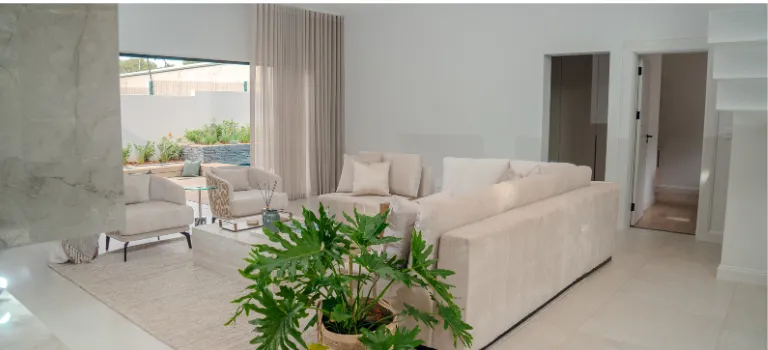
Living room lighting should never come from a single source. The most effective living room interior design ideas in this space involve replacing the single-source approach with a three-tier lighting system:
- Ambient lighting: warm-toned ceiling fixture or cove lighting that provides general illumination without the harshness of a downlight grid. Specify at 2700K for maximum warmth.
- Task lighting: a floor lamp beside the reading chair, a table lamp on the console, pendant lighting over the coffee table or dining area. These create pools of light that make different areas of the room feel purposeful.
- Accent lighting: strip lighting behind a TV unit, uplighting beside a plant, spotlighting on a piece of art. These layers give a room depth and atmosphere that flat ambient light cannot produce.
Immediate upgrade: If you do one thing to improve your living room this year, add a floor lamp and a table lamp and turn off the overhead lights to transform the atmosphere at a fraction of the cost of any renovation.
Living Room Interior Design Idea 5: Textured Feature Walls That Add Depth Without Clutter
A living room that feels flat, generic, or like it could belong to anyone is almost always missing one thing: a surface with texture. The textured feature wall is one of the most versatile living room interior design ideas available. It adds visual depth, warmth, and a sense of deliberate design without adding furniture, changing the layout, or requiring significant structural work.
What are the best feature wall ideas for a South African lounge?
- Venetian plaster or textured lime wash creates a wall that reads differently in different lights, with a soft warmth that no paint finish can replicate. Particularly effective in north-facing rooms that receive strong afternoon sun.
- Vertical timber panelling or slat walls add warmth and a sense of architectural intention. Works especially well in homes with bare concrete or plasterboard walls with no original character.
- Stone cladding: natural or composite stone on a fireplace wall or TV wall brings the material weight and texture of the landscape into the room. Most effective when the stone is used on all surfaces of a single wall rather than as a partial application.
- Colour drenching: painting one wall – and its ceiling section and skirting – in a single deep, saturated colour creates an immersive focal point without any surface texture. Forest green, deep navy, and dusty terracotta are all performing strongly in South African living rooms in 2026.
Scale consideration: In South African homes with high ceilings (a common feature in older Gauteng homes), a feature wall treatment that runs from the floor to the ceiling is essential. Stopping a panelling or stone application at picture rail height in a high-ceilinged room looks unfinished. The eye expects the treatment to complete itself.
How Can I Create Better Indoor-Outdoor Flow from My Living Room?
This question captures a uniquely South African opportunity. Our climate gives us approximately 300 days of usable outdoor weather per year – and most living rooms in South Africa are not designed to take full advantage of it. The lounge faces the garden, but the connection is broken by a standard sliding door, a step change in level, a different flooring material, and an undefined patio that feels like an afterthought.
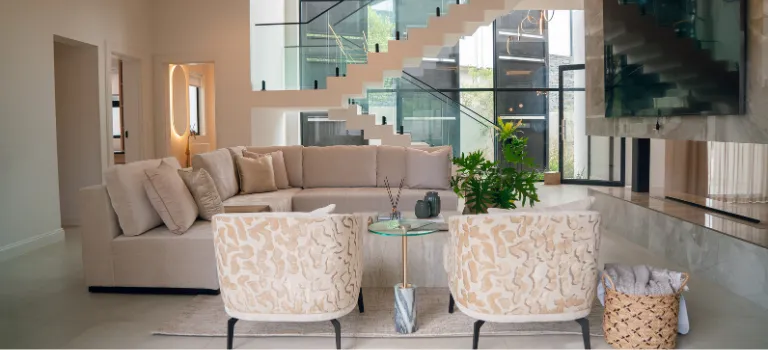
Creating genuine indoor-outdoor flow from your living room is one of the highest-return living room interior design ideas in our climate. Here is how it works in practice:
- Continuous flooring: using the same tile or large-format stone from inside the living room to the patio removes the most visible physical boundary between the two spaces. The floor should only change to a slightly more textured or grip-surfaced version of the same material for safety outdoors.
- Folding or stacking door systems: replacing a standard sliding door with a full-width folding system that opens the entire wall transforms the relationship between lounge and garden. When open, the outdoor space becomes an extension of the interior – not a separate area accessed through an opening.
- Consistent ceiling height: where structurally possible, extending the interior ceiling height onto the covered patio section – or designing the patio roof to align with the interior ceiling plane – creates a visual and spatial continuity that a step-down patio roof destroys.
- Designed outdoor seating: the patio furniture should be chosen with the same intention as the interior. A designed outdoor lounge, not a plastic table and four garden chairs, reads as a genuine extension of the interior living space.
Key insight: The outdoor living area should be designed simultaneously with the interior, not as a separate project. The decisions that create genuine indoor-outdoor flow (door systems, flooring continuity, ceiling treatment) are all architectural and almost impossible to retrofit convincingly after the interior is complete.
Living Room Interior Design Idea 7: Colour Drenching for Lounges That Lack Character
South African homeowners have historically been conservative with colour in living rooms – choosing safe neutrals, greige tones, and builder-grade magnolia that feel safe but produce rooms that feel anonymous. In 2026, the pendulum is swinging. Colour drenching, the technique of applying a single rich colour to all surfaces of a room, including walls, ceiling, skirting boards, and joinery, is producing some of the most distinctive and atmospherically powerful living rooms.
The counterintuitive truth about colour drenching is that it does not make a room feel smaller. It makes it feel more intentional. A living room where every surface is wrapped in a deep forest green or a warm dusty terracotta feels like it was designed, not assembled. And in a small or awkwardly proportioned lounge, the immersive quality of colour drenching removes the eye’s ability to assess the room’s limitations. It simply feels like a space with a strong identity.
Which colours work best for colour-drenched living rooms in South Africa?
- Deep forest green: particularly effective in living rooms with warm timber floors. Feels simultaneously contemporary and grounded.
- Warm terracotta or clay: resonates deeply with the South African landscape and light. Excellent in rooms that receive strong afternoon sun.
- Dusty sage or eucalyptus green: a softer alternative to forest green that works well in smaller living rooms or south-facing rooms with less natural light.
- Deep warm navy: creates a dramatic, intimate atmosphere ideal for a formal sitting room or a home with high ceilings.
- Warm mushroom or putty: the most wearable colour-drenched option for those cautious about commitment – earthy enough to feel intentional, neutral enough to remain flexible.
Should I Use South African Artisan Design in My Living Room? Here’s Why the Answer Is Yes
The living rooms that stand out in South Africa in 2026 are not the ones that look like they could appear in an international design magazine. They are the ones who could only exist here. Locally crafted furniture, handmade South African ceramics, woven textiles from artisanal studios, reclaimed yellowwood used in bespoke joinery. These elements give a living room a quality that mass-produced furnishing cannot replicate: a sense of place.
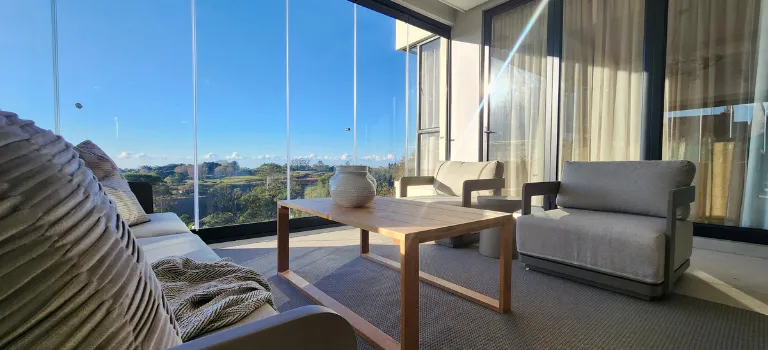
What makes South African artisan design particularly compelling as a living room idea is the quality of what is being produced. South African furniture makers, ceramicists, and textile weavers are producing work of genuinely exceptional standard, and in many cases, at price points that compete with or undercut imported alternatives of lower quality.
How to incorporate South African artisan design in your lounge
- Commission a custom coffee table or shelving unit from a local furniture maker – sized precisely for your room rather than selected from a catalogue
- Use a large-format handwoven rug as the anchor piece of the lounge – the texture and colour variation in handmade rugs is unmatched by machine production
- Place handmade ceramic vessels, bowls, or lamps as focal objects on a console or coffee table
- Hang a large-scale textile wall piece or woven work as the feature element behind the sofa – more distinctive and far less predictable than a gallery wall of prints
- Use reclaimed yellowwood or stinkwood in custom built-in bookshelves or media units – the grain and history of the material give the room immediate depth and character
Living Room Interior Design Idea 9: One Sculptural Piece That Changes Everything
A living room where everything is equally forgettable is one of the most common design failures in South African homes. Every piece of furniture is pleasant, proportionate, and inoffensive, and the room has no soul. The solution is usually a single sculptural or statement element that gives the eye somewhere to land and the room a reason to exist beyond function.
This does not require a large budget. It requires one deliberate choice and the discipline to resist filling the rest of the room until that choice has been made.
What makes a sculptural statement piece in a living room?
- An oversized curved sofa – a single, generous, biscuit-toned or forest green curved sofa is one of the most impactful living room interior design ideas currently trending in South African homes. It anchors the room, invites gathering, and signals that the space was designed with intention.
- A bespoke coffee table – a live-edge timber slab, a stone block on steel legs, or a hand-cast concrete table. These pieces are the centrepiece of any seating arrangement and can be commissioned locally for a reasonable cost.
- A floor-to-ceiling bookshelf – designed as a piece of furniture rather than a functional storage unit, with considered spacing, objects, and lighting integrated into it.
- A large-format artwork – a single significant work at scale, properly lit, is worth twenty small prints arranged in a gallery wall.
- A lighting fixture used as sculpture – an oversized rattan pendant, a hand-blown glass chandelier, or a dramatic sculptural floor lamp.
Design discipline: Choose your statement piece first. Then choose everything else in relation to it. This is the opposite of how most people furnish a living room — they fill the space first and wonder why nothing has presence. Presence requires space around it.
What Is the Best Way to Add Storage to a Living Room Without It Looking Cluttered?
Clutter is the most common enemy of a well-designed living room, and it almost always stems from inadequate storage that was not considered at the design stage. The best living room storage ideas are the ones that are invisible. They are integrated into the room’s architecture, consistent with the material language of the design, and functional without announcing themselves.
Smart living room storage ideas for South African homes
- Built-in cabinetry flanking a fireplace or TV wall – floor-to-ceiling joinery with a combination of closed storage (for the things you want hidden) and open display shelving (for the things you want to show) is the gold standard of living room storage in Gauteng homes
- A media unit with concealed storage for remotes, gaming equipment, and cables – the living room surfaces most frequently overwhelmed by clutter are those around the television
- A window seat with internal storage – particularly effective in bay window spaces common in older Gauteng homes, where the window recess can be converted into a seating niche with a hinged lid over deep storage beneath
- A sideboard or credenza in the dining-lounge zone – a well-chosen piece at console height provides storage for linens, tableware, and accessories while doubling as a display surface
- Integrated TV unit with full-height cabinetry – the TV wall is the most common living room storage opportunity that goes to waste in South African homes. A designed unit that runs from floor to ceiling and wall to wall transforms a functional necessity into an architectural feature
Planning note: Living room storage works best when it is designed as part of the room’s architecture, not selected from a furniture catalogue and placed against a wall. Custom built-in cabinetry, designed by an interior designer and built by a skilled joiner, costs more than flat-pack but lasts indefinitely and fits the specific proportions of your room precisely.
Which of These Living Room Interior Design Ideas Is Right for Your Home?
The right living room interior design idea depends not on what is trending, but on what your specific living room is failing to do. Here is a simple diagnostic to guide your decision:
- If the room feels cold and unwelcoming → Ideas 1 (warm minimalism) or 7 (colour drenching)
- If the open-plan layout feels like one undifferentiated space → Idea 2 (zone definition)
- If the room feels disconnected from nature and the outdoors → Ideas 3 (biophilic) or 6 (indoor-outdoor flow)
- If the lighting makes everything look flat and uninviting → Idea 4 (layered lighting)
- If the walls feel bare and generic → Idea 5 (textured feature wall)
- If the room has no personality or distinctiveness → Ideas 8 (artisan design) or 9 (sculptural statement)
- If clutter overwhelms every attempt to keep things tidy → Idea 10 (integrated storage)
Most living rooms have more than one of these problems, and the most effective approach is to address the layout and structural decisions first (storage, door systems, lighting infrastructure), then layer in the material and decorative decisions (texture, colour, artisan pieces) once the spatial foundation is correct.
The most common mistake in a living room redesign is spending money on beautiful things before resolving the space. A designer sofa in a badly lit, poorly zoned, cluttered room is still a badly lit, poorly zoned, cluttered room with a designer sofa in it.
Transform Your Living Room with Ahvia Designs, Gauteng
Whether you are redesigning a single room or planning a full home renovation across Johannesburg or Pretoria, Ahvia Designs brings every living room interior design idea in this guide to life with professional spatial planning, 3D visualisation, material specification, and complete project management from consultation to final styling.
We design living rooms that work for how you actually live – not how a showroom suggests you might.
Ready to redesign your living room? Book a free interior design consultation with Ahvia Designs today. Call 080 012 7449 or visit our website.
FAQ About Living Room Design Ideas
What are the best living room interior design ideas for South African homes in 2026?
The top ideas are: warm minimalism with earthy palettes, zone definition in open-plan lounges, biophilic elements and natural materials, layered lighting, textured feature walls, indoor-outdoor flow, colour drenching, local artisan design, sculptural statement furniture, and integrated storage.
How do I make my open-plan living room feel more defined?
Use a large rug to anchor the lounge zone, a pendant above the dining area to define that zone, position the sofa facing away from the kitchen, and use a change in ceiling treatment or flooring to reinforce the boundary.
What colours are trending for living rooms in South Africa in 2026?
Earthy warm tones – terracotta, ochre, dusty sage, warm mushroom – alongside deeper saturated options like forest green, deep navy, and clay. Colour drenching a single room in one of these tones is the most distinctive approach.
How can I add character to a generic living room without a full renovation?
Add a textured feature wall (lime wash or panelling), replace the overhead lighting with a floor lamp and table lamp, introduce one large-scale handmade piece (rug, ceramic, artwork), and choose a single sculptural furniture piece to anchor the seating area.
What is the best way to create indoor-outdoor flow in my living room?
Use continuous flooring from inside to outside, replace a standard sliding door with a full-width folding system, design the outdoor patio as a properly furnished room, and align ceiling heights between interior and exterior where possible.